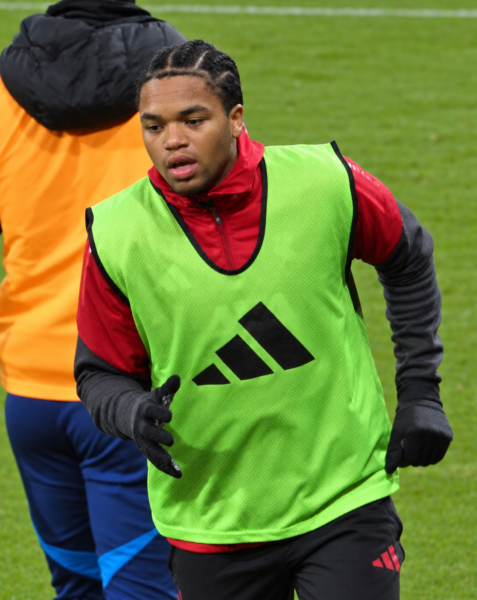
Rio Ngumoha has made four starts for Liverpool this season. Only one has come in the Premier League. That distinction should sit at the heart of the discussion about his next contract.
The 18-year-old is getting opportunities, including responsibility in Europe. He is also learning to influence matches from the right wing, having previously been more accustomed to operating on the left. Liverpool’s task is to turn that progress into a clear route towards a bigger role, while managing the demands on a young player.
A new deal would be welcome. The football plan that accompanies it will matter just as much.
Ngumoha’s Liverpool minutes tell two stories
Through the Brentford match on 17 October, Ngumoha had made eight competitive appearances, including four starts, and played 370 minutes according to FootballTransfers’ competition statistics. The breakdown reveals an important distinction between his opportunities in the Premier League and elsewhere.
Swipe sideways to view the full table.
| Competition | Appearances | Starts | Substitute appearances | Minutes |
|---|---|---|---|---|
| Premier League | 5 | 1 | 4 | 153 |
| Champions League | 2 | 2 | 0 | 145 |
| Carabao Cup | 1 | 1 | 0 | 72 |
| Total | 8 | 4 | 4 | 370 |
Source: FootballTransfers. Senior competitive club matches only; friendlies and England appearances excluded. Playing-time totals can vary slightly between statistical providers.
His four starts were against Newcastle on 23 August, Atlético Madrid on 9 September, Tottenham in the League Cup on 15 September and LASK on 14 October. Three came outside the Premier League.
Across Liverpool’s first seven league fixtures, he started once, came off the bench four times and was unused twice.
That is a more useful picture than simply saying he has played eight times. Liverpool have trusted him to start both Champions League matches, but sustained league involvement remains the next step. His 153 Premier League minutes, using FootballTransfers’ figures, amount to less than two full matches.
There is an important balance here. Ngumoha is only 18, and Liverpool are entitled to manage his workload carefully. But regular opportunities, rather than occasional appearances alone, will ultimately determine how far his development progresses.
Where Liverpool have used him
Ngumoha’s developing versatility is particularly interesting. He started on the right against Newcastle, with Cody Gakpo occupying the left flank. His recent performances suggest he is becoming increasingly comfortable in a role that was initially less familiar.
Against Atlético Madrid, Ngumoha’s movement and delivery helped produce Liverpool’s winning goal. At LASK, he again operated on the right and remained on the pitch until the 85th minute. He played an important part in Liverpool’s attacking combinations during the 6-3 Champions League victory.
Brentford provided another opportunity on that flank. He replaced the injured Jeremie Frimpong in the 52nd minute, with Víctor Muñoz moving to right-back during the reshuffle.
Speaking after the match, Ngumoha acknowledged how much his understanding of the position had improved. In Liverpool’s official interview, he said: “I like playing on both sides now as well”.
That flexibility matters. Liverpool are not simply developing a winger who can offer an alternative on the left. They are giving him experience in different attacking positions, something that should improve his prospects of earning minutes in a competitive squad.
Versatility, however, should create opportunities rather than become an excuse to move a young player around without a clear development plan.
The contributions an assist column misses
There are already examples of Ngumoha influencing important moments without receiving a goal or an assist.
In Liverpool’s 2-1 victory over Atlético Madrid, his movement and cross into the middle produced a ricochet that fell to Alexis Mac Allister, who struck the winning goal.
Ngumoha was not credited with an assist, but his involvement helped create the opening. It was precisely the sort of contribution that can disappear when a performance is judged solely through goals and assists.
The LASK match provided further evidence. Ngumoha drove into the penalty area before going down under a challenge. The referee allowed play to continue, Lewis Koumas reacted to the loose ball and Bradley Barcola scored his first Liverpool goal.
Liverpool’s official match report highlighted Ngumoha’s part in the move.
Later in the same game, he released Frimpong down the right before the full-back crossed for Barcola to complete his hat-trick, a sequence also recorded in the Guardian’s match report.
Neither move appears as an assist in Ngumoha’s statistics, but both demonstrate useful qualities: the confidence to attack defenders, the ability to carry possession into dangerous areas and an awareness of when a teammate is better placed to provide the final pass.
At Brentford, the circumstances were different. Liverpool were trailing against ten men when Ngumoha entered the match. His cross following a short corner presented Virgil van Dijk with an opportunity, although the defender’s effort went wide.
Ngumoha was also fouled by Vitaly Janelt in added time, bringing a second yellow card for the Brentford midfielder. The incidents are documented in Brentford’s own match report.
The numerical advantage must be considered when assessing his performance. Nevertheless, Liverpool were behind when he came on, and these were meaningful minutes in a match that still required a response.
How the media saw it
The Athletic’s James Pearce reported on 18 October that Ngumoha remains in discussions with Liverpool over a longer contract, with his existing agreement running until 2028. Speaking after the victory at Brentford, the teenager indicated that negotiations were progressing and that he was leaving the details to his agent while concentrating on football.
Pearce’s separate analysis of the Brentford victory presented Ngumoha as an important influence on Liverpool’s comeback. His contribution reinforced the argument that the winger can make a difference in meaningful Premier League minutes, not just in cup competitions.
Writing in The Times on 16 October, Paul Joyce examined the opportunities Andoni Iraola is giving Liverpool’s younger players. He identified Ngumoha as an example for other emerging talents and highlighted the importance of the first-team pathway that originally persuaded him to leave Chelsea. Joyce also reported that discussions over a longer contract were continuing.
The Guardian’s Andy Hunter offered further insight into Iraola’s thinking. In his report on 16 October, he highlighted the manager’s admiration for Ngumoha’s ability in one-against-one situations, alongside the areas requiring improvement. Iraola specifically identified defensive work, physical duels and adapting to Premier League demands as part of the winger’s continuing development.
Taken together, the reporting presents a more balanced picture than one of a youngster frustrated by limited opportunities. Liverpool recognise Ngumoha’s potential, while the player appears willing to compete and develop. The question is how that mutual confidence translates into a sustained first-team role.
What a credible pathway should mean
Liverpool cannot promise Ngumoha a permanent starting place. Nor should they need to. Competition is part of representing a club that expects to challenge for major trophies.
Barcola, Gakpo, Muñoz and other attacking options all have legitimate claims for involvement. Iraola must make selections based on performances, opponents, fitness and the needs of the team.
But there is a distinction between promising a young player a place and giving him a realistic opportunity to earn one.
A credible pathway should include clear feedback about his performances, planned opportunities across competitions and the prospect of starts that are not dependent entirely on injuries or major squad rotation.
Liverpool’s early Champions League selections suggest that the coaching staff already trust Ngumoha with responsibility. That is encouraging. The next question is whether stronger Premier League involvement follows as he develops.
It is equally important that he is allowed to make mistakes. A winger who takes defenders on will sometimes lose possession. A young player learning the movements required on the opposite flank will occasionally make the wrong decision.
Those moments should inform coaching rather than automatically become reasons to withdraw opportunities.
Supporters have a responsibility here too. We cannot demand that talented youngsters receive meaningful playing time and then expect mature, consistent performances every time they step onto the pitch.
Development rarely follows a straight line. Progress can be visible in positioning, decision-making and contributions to attacking moves long before it produces impressive individual statistics.
King of the Kop’s take
Liverpool have the beginnings of a convincing plan for Ngumoha: starts in Europe, experience on both wings and involvement in matches that matter. The evidence does not support the argument that he is being ignored.
At the same time, one Premier League start in seven matches explains why questions about his next steps are reasonable.
A new contract would give Liverpool greater security and provide Ngumoha with certainty about his future. But contracts alone do not develop footballers. Opportunities, good coaching and an understanding of what comes next are equally important.
Iraola has shown a willingness to trust Ngumoha. The challenge is to build on that trust as competition for places increases.
Ngumoha is learning to offer Liverpool more. Liverpool must continue giving him the opportunities to turn that progress into a bigger role in the team.